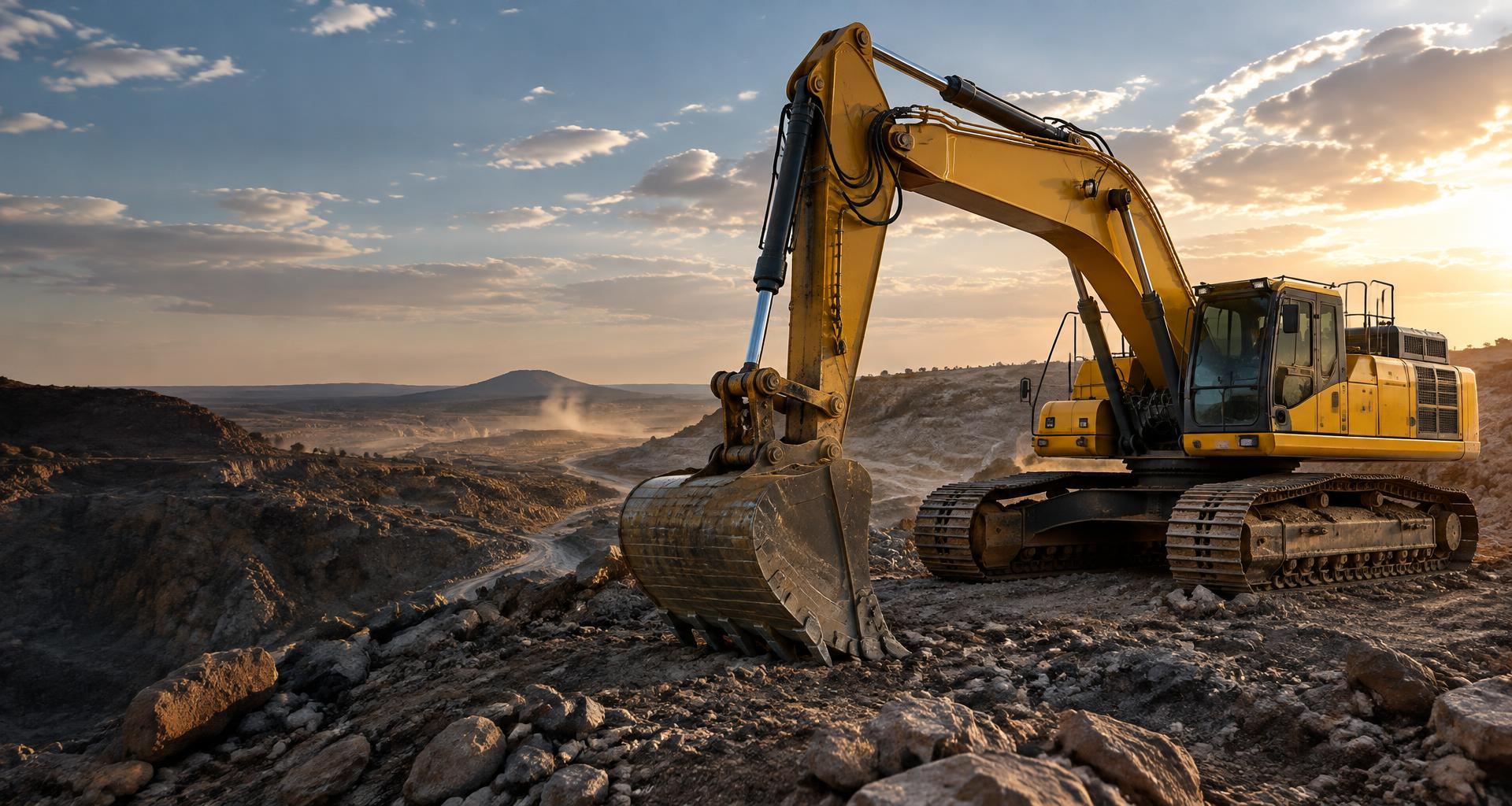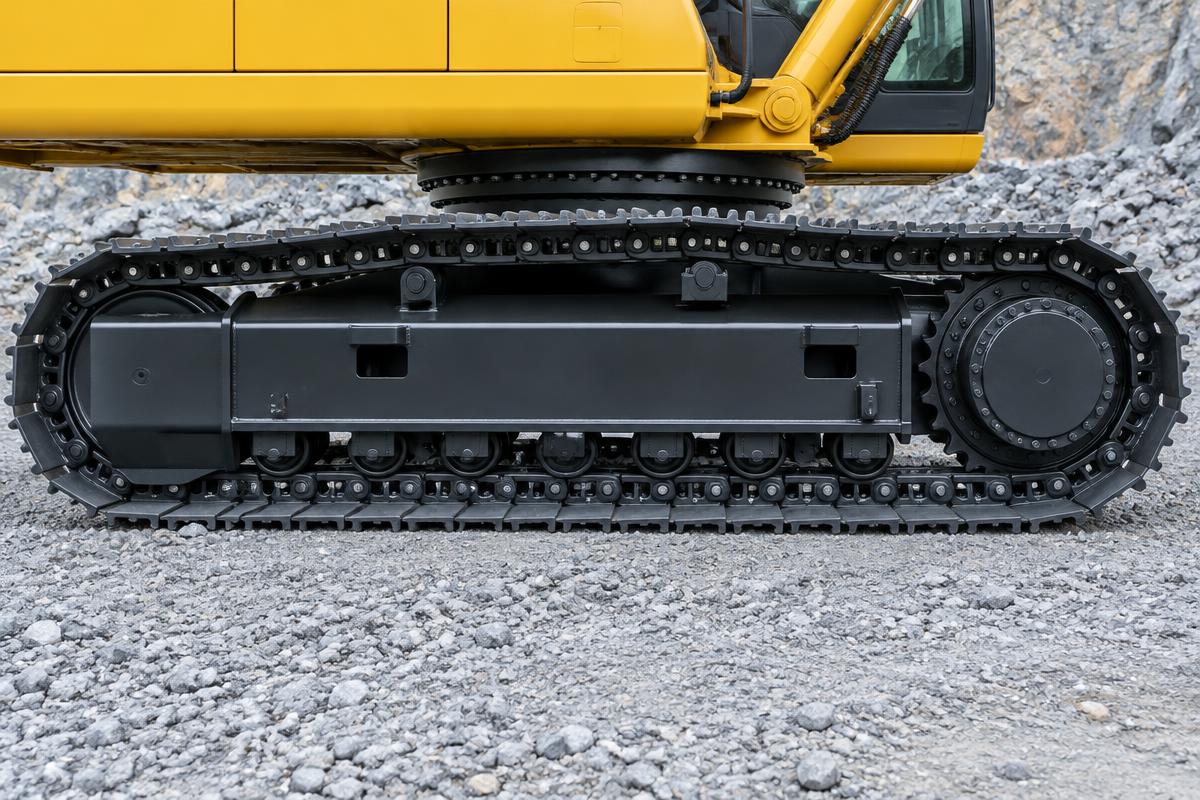
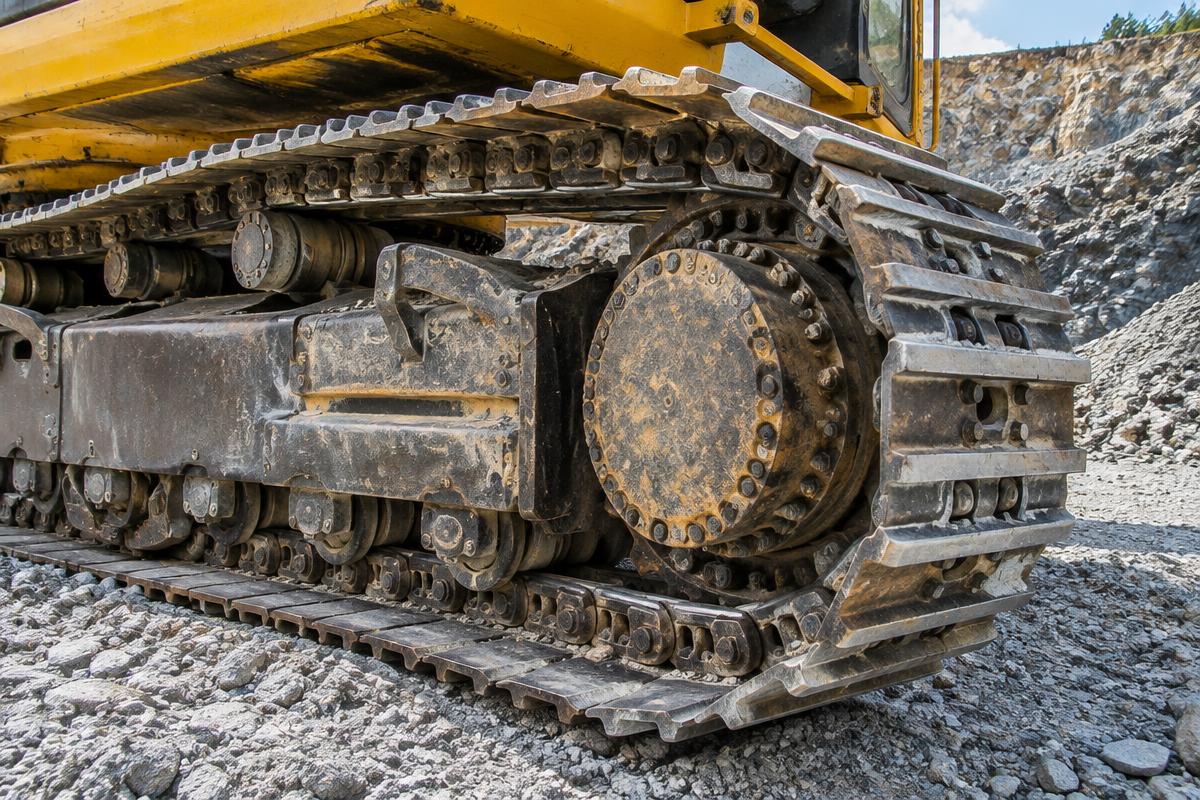
Your undercarriage works in some of the toughest conditions on site. A consistent inspection routine helps distinguish normal wear from a fault that needs immediate attention.
01 / Read the wear patterns
Inspect both sides of the machine on clean, level ground. Uneven wear can point to alignment, tension or operating conditions. Measure components rather than relying on appearance alone.
- Hooked or pointed sprocket teeth
- Uneven wear on track links and shoes
- Oil around roller or idler seals
- Cracked shoes or missing fasteners
- Abnormal noise, vibration or poor tracking
02 / Track tension is not a guess
A track that is too tight places extra load on the chain and rollers. A loose track can derail. Always use the model-specific track-sag measurement and adjustment procedure in the manufacturer service manual.
- Remove compacted dirt before inspection.
- Measure using the OEM procedure for your machine.
- Record machine hours and measurements each time.
03 / Plan replacement as a system
A new chain running against heavily worn sprockets can wear prematurely. Ask a qualified undercarriage technician to assess the complete track group and confirm compatible components before ordering.
- Provide model and serial number.
- Include photos and current wear measurements.
- Assess chains, sprockets, rollers and idlers together.
Good maintenance starts with a clean inspection, reliable measurements, and the right parts for the machine.
Inspection reference
| Component | Record during inspection | Reference |
|---|---|---|
| Track chain | Link height and pin/bush wear | Model-specific OEM limits |
| Track rollers | Running surface wear and seal condition | Model-specific OEM limits |
| Sprocket | Tooth profile and engagement | Model-specific OEM limits |
| Track shoes | Cracks, fasteners and grouser wear | Model-specific OEM limits |
General educational guidance, not a machine-specific service specification. OEM instructions and qualified technicians take precedence. Images are illustrative.